
Martin Buber (Hebrew: מרטין ×'ו×'ר‎, German: Martin Buber, Yiddish: מ×רטין ×'ו×'ער; February 8, 1878 â€" June 13, 1965) was an Austrian-born Israeli Jewish philosopher best known for his philosophy of dialogue, a form of existentialism centered on the distinction between the Iâ€"Thou relationship and the Iâ€"It relationship. Born in Vienna, Buber came from a family of observant Jews, but broke with Jewish custom to pursue secular studies in philosophy. In 1902, he became the editor of the weekly Die Welt, the central organ of the Zionist movement, although he later withdrew from organizational work in Zionism. In 1923, Buber wrote his famous essay on existence, Ich und Du (later translated into English as I and Thou), and in 1925, he began translating the Hebrew Bible into the German language.
In 1930, Buber became an honorary professor at the University of Frankfurt am Main, but resigned in protest from his professorship immediately after Adolf Hitler came to power in 1933. He then founded the Central Office for Jewish Adult Education, which became an increasingly important body as the German government forbade Jews to attend public education. In 1938, Buber left Germany and settled in Jerusalem, Mandate Palestine (later Israel), receiving a professorship at Hebrew University and lecturing in anthropology and introductory sociology.
Buber was a direct descendent of the prominent 16th century rabbi Meir Katzenellenbogen, known as the Maharam of Padua, as was his cousin, cosmetics entrepreneur Helena Rubinstein. Karl Marx is another notable relative.
Buber's wife Paula died in 1958, and he died at his home in the Talbiya neighborhood of Jerusalem on June 13, 1965. They had two children: a son, Rafael Buber and a daughter, Eva Strauss-Steinitz.
Early life
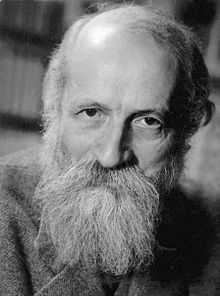
Martin (Hebrew name: מָרְ×"Ö³Ö¼×›Ö·×™, Mordechai) Buber was born in Vienna to an Orthodox Jewish family. "Because his parents divorced when he was three years old, he was educated and raised by his grandfather in Lvov where he learned the Talmud, literature and the ways of Chassidism whose Rabbis and leaders he became exposed to." His grandfather, Solomon Buber, was a renowned scholar of Midrash and Rabbinic Literature. At home Buber spoke Yiddish and German. In 1892 Buber returned to his father's house in Lemberg, today's Lviv, Ukraine.
Despite Buber's connection to the House of David as a descendant of Meir Katzenellenbogen, illustrated in The Unbroken Chain, a personal religious crisis led him to break with Jewish religious customs: he started reading Immanuel Kant, Søren Kierkegaard, and Friedrich Nietzsche. The latter two, in particular, inspired him to pursue studies in philosophy. In 1896, Buber went to study in Vienna (philosophy, art history, German studies, philology).
In 1898, he joined the Zionist movement, participating in congresses and organizational work. In 1899 while studying in Zürich, Buber met his future wife, Paula Winkler, a non-Jewish Zionist writer from Munich who later converted to Judaism.
Themes

Buber's evocative, sometimes poetic, writing style marked the major themes in his work: the retelling of Hasidic tales, Biblical commentary, and metaphysical dialogue. A cultural Zionist, Buber was active in the Jewish and educational communities of Germany and Israel. He was also a staunch supporter of a binational solution in Palestine, and after the establishment of the Jewish state of Israel, of a regional federation of Israel and Arab states. His influence extends across the humanities, particularly in the fields of social psychology, social philosophy, and religious existentialism.
Buber's attitude towards Zionism was tied to his desire to promote a vision of "Hebrew humanism". According to Laurence J. Silberstein, the terminology of "Hebrew humanism" was coined to "distinguish [Buber's] form of nationalism from that of the official Zionist movement" and to point to how "Israel's problem was but a distinct form of the universal human problem. Accordingly, the task of Israel as a distinct nation was inexorably linked to the task of humanity in general".
Zionist views
Approaching Zionism from his own personal viewpoint, Buber disagreed with Theodor Herzl about the political and cultural direction of Zionism. Herzl envisioned the goal of Zionism in a nation-state, but did not consider Jewish culture or religion necessary. In contrast, Buber believed the potential of Zionism was for social and spiritual enrichment. For example, Buber argued that following the formation of the Israeli state, there would need to be reforms to Judaism: "We need someone who would do for Judaism what Pope John XXIII has done for the Catholic Church". Herzl and Buber would continue, in mutual respect and disagreement, to work towards their respective goals for the rest of their lives.
In 1902 Buber became the editor of the weekly Die Welt, the central organ of the Zionist movement. However, a year later he became involved with the Jewish Hasidim movement. Buber admired how the Hasidic communities actualized their religion in daily life and culture. In stark contrast to the busy Zionist organizations, which were always mulling political concerns, the Hasidim were focused on the values which Buber had long advocated for Zionism to adopt. In 1904, he withdrew from much of his Zionist organizational work and devoted himself to study and writing. In that year he published his thesis, Beiträge zur Geschichte des Individuationsproblems, on Jakob Böhme and Nikolaus Cusanus.
In the early 1920s Martin Buber started advocating a binational Jewish-Arab state, stating that the Jewish people should proclaim "its desire to live in peace and brotherhood with the Arab people and to develop the common homeland into a republic in which both peoples will have the possibility of free development".
Buber rejected the idea of Zionism as just another national movement and wanted instead to see the creation of an exemplary society; a society which would not, he said, be characterized by Jewish domination of the Arabs. It was necessary for the Zionist movement to reach a consensus with the Arabs even at the cost of the Jews remaining a minority in the country. In 1925 he was involved in the creation of the organization Brit Shalom (Covenant of Peace), which advocated the creation of a binational state, and throughout the rest of his life he hoped and believed that Jews and Arabs one day would live in peace in a joint nation. In 1942, he coâ€'founded the Ihud party which advocated a binationalist program. Nevertheless he was connected with decades of friendship to Zionists and philosophers like Chaim Weizmann, Max Brod, Hugo Bergman, and Felix Weltsch, who were close friends of his from old European times in Prague, Berlin, and Vienna to the Jerusalem of the 1940s through the 1960s.
After Israel gained independence in 1948, Buber advocated Israel's participation in a federation of "Near East" states wider than just Palestine.
Literary and academic career
From 1910 to 1914, Buber studied myths and published editions of mythic texts. In 1916 he moved from Berlin to Heppenheim.
During World War I, he helped establish the Jewish National Commission to improve the condition of Eastern European Jews. During that period he became the editor of Der Jude (German for "The Jew"), a Jewish monthly (until 1924). In 1921, Buber began his close relationship with Franz Rosenzweig. In 1922, he and Rosenzweig co-operated in Rosenzweig's House of Jewish Learning, known in Germany as Lehrhaus.
In 1923, Buber wrote his famous essay on existence, Ich und Du (later translated into English as I and Thou). Though he edited the work later in his life, he refused to make substantial changes. In 1925, he began, in conjunction with Franz Rosenzweig, translating the Hebrew Bible into German. He himself called this translation Verdeutschung ("Germanification"), since it does not always use literary German language, but instead attempts to find new dynamic (often newly invented) equivalent phrasing to respect the multivalent Hebrew original. Between 1926 and 1930, Buber co-edited the quarterly Die Kreatur ("The Creature").
In 1930, Buber became an honorary professor at the University of Frankfurt am Main. He resigned in protest from his professorship immediately after Adolf Hitler came to power in 1933. On October 4, 1933 the Nazi authorities forbade him to lecture. In 1935 he was expelled from the Reichsschrifttumskammer (the National Socialist authors' association). He then founded the Central Office for Jewish Adult Education, which became an increasingly important body as the German government forbade Jews to attend public education. The Nazi administration increasingly obstructed this body.
Finally, in 1938, Buber left Germany and settled in Jerusalem, then capital of Mandate Palestine. He received a professorship at Hebrew University, there lecturing in anthropology and introductory sociology. The lectures he gave during the first semester were published in the book The problem of man (Das Problem des Menschen); in these lectures he discusses how the question "What is Man?" became the central one in philosophical anthropology. He participated in the discussion of the Jews' problems in Palestine and of the Arab question â€" working out of his Biblical, philosophic, and Hasidic work.
He became a member of the group Ihud, which aimed at a bi-national state for Arabs and Jews in Palestine. Such a binational confederation was viewed by Buber as a more proper fulfillment of Zionism than a solely Jewish state. In 1946 he published his work Paths in Utopia, in which he detailed his communitarian socialist views and his theory of the "dialogical community" founded upon interpersonal "dialogical relationships".
After World War II Buber began lecture tours in Europe and the United States. In 1952 he argued with Jung over the existence of God.
Philosophy
Buber is famous for his thesis of dialogical existence, as he described in the book I and Thou. However, his work dealt with a range of issues including religious consciousness, modernity, the concept of evil, ethics, education, and Biblical hermeneutics.
Buber rejected the label of "philosopher" or "theologian" claiming he was not interested in ideas, only personal experience, and could not discuss God but only relationships to God.
Dialogue and existence
In I and Thou, Buber introduced his thesis on human existence. Inspired partly by Feuerbach's The Essence of Christianity and Kierkegaard's "Single One", Buber worked upon the premise of existence as encounter. He explained this philosophy using the word pairs of Ich-Du and Ich-Es to categorize the modes of consciousness, interaction, and being through which an individual engages with other individuals, inanimate objects, and all reality in general. Theologically, he associated the first with the Jewish Jesus and the second with the gentile Christian Paul. Philosophically, these word pairs express complex ideas about modes of beingâ€"particularly how a person exists and actualizes that existence. As Buber argues in I and Thou, a person is at all times engaged with the world in one of these modes.
The generic motif Buber employs to describe the dual modes of being is one of dialogue (Ich-Du) and monologue (Ich-Es). The concept of communication, particularly language-oriented communication, is used both in describing dialogue/monologue through metaphors and expressing the interpersonal nature of human existence.
Ich-Du
Ichâ€'Du ("Iâ€'Thou" or "Iâ€'You") is a relationship that stresses the mutual, holistic existence of two beings. It is a concrete encounter, because these beings meet one another in their authentic existence, without any qualification or objectification of one another. Even imagination and ideas do not play a role in this relation. In an Iâ€"Thou encounter, infinity and universality are made actual (rather than being merely concepts). Buber stressed that an Ichâ€'Du relationship lacks any composition (e.g., structure) and communicates no content (e.g., information). Despite the fact that Ichâ€'Du cannot be proven to happen as an event (e.g., it cannot be measured), Buber stressed that it is real and perceivable. A variety of examples are used to illustrate Ichâ€'Du relationships in daily lifeâ€"two lovers, an observer and a cat, the author and a tree, and two strangers on a train. Common English words used to describe the Ichâ€'Du relationship include encounter, meeting, dialogue, mutuality, and exchange.
One key Ichâ€'Du relationship Buber identified was that which can exist between a human being and God. Buber argued that this is the only way in which it is possible to interact with God, and that an Ichâ€'Du relationship with anything or anyone connects in some way with the eternal relation to God.
To create this Iâ€"Thou relationship with God, a person has to be open to the idea of such a relationship, but not actively pursue it. The pursuit of such a relation creates qualities associated with Itâ€'ness, and so would prevent an Iâ€'You relation, limiting it to Iâ€'It. Buber claims that if we are open to the Iâ€"Thou, God eventually comes to us in response to our welcome. Also, because the God Buber describes is completely devoid of qualities, this Iâ€"Thou relationship lasts as long as the individual wills it. When the individual finally returns to the Iâ€'It way of relating, this acts as a barrier to deeper relationship and community.
Ich-Es
The Ich-Es ("Iâ€'It") relationship is nearly the opposite of Ichâ€'Du. Whereas in Ichâ€'Du the two beings encounter one another, in an Ichâ€'Es relationship the beings do not actually meet. Instead, the "I" confronts and qualifies an idea, or conceptualization, of the being in its presence and treats that being as an object. All such objects are considered merely mental representations, created and sustained by the individual mind. This is based partly on Kant's theory of phenomenon, in that these objects reside in the cognitive agent’s mind, existing only as thoughts. Therefore, the Ichâ€'Es relationship is in fact a relationship with oneself; it is not a dialogue, but a monologue.
In the Ich-Es relationship, an individual treats other things, people, etc., as objects to be used and experienced. Essentially, this form of objectivity relates to the world in terms of the self â€" how an object can serve the individual’s interest.
Buber argued that human life consists of an oscillation between Ichâ€'Du and Ichâ€'Es, and that in fact Ichâ€'Du experiences are rather few and far between. In diagnosing the various perceived ills of modernity (e.g., isolation, dehumanization, etc.), Buber believed that the expansion of a purely analytic, material view of existence was at heart an advocation of Ichâ€'Es relations â€" even between human beings. Buber argued that this paradigm devalued not only existents, but the meaning of all existence.
Note on translation
Ich und Du has been translated from the original German into many other languages. However, because Buber's use of German was highly idiomatic and often unconventional, there has naturally been debate on how best to convey the complex messages in his text. One critical debate in the English-speaking world has centered on the correct translation of the key word pairs Ich-Du and Ich-Es. In the German the word "Du" is used, while in the English two different translations are used: "Thou" (used in Ronald Smith’s version) and "You" (used by Walter Kaufmann). The key problem is how to translate the very personal, even intimate German "Du", which has no direct equivalent in Modern English. Smith argued that "Thou" invokes the theological and reverential implications which Buber intended (e.g., Buber describes God as the eternal "Du"). Kaufmann asserted that this wording was archaic and impersonal, offering "You" because (like the German Du) it has colloquial usage in intimate conversation.
Despite this debate, Buber’s book is widely known in the English-speaking world as I and Thou, perhaps because the Smith translation appeared years before the Kaufmann one. However, both the Smith and Kaufmann translations are widely available.
Hasidism and mysticism
Buber was a scholar, interpreter, and translator of Hasidic lore. He viewed Hasidism as a source of cultural renewal for Judaism, frequently citing examples from the Hasidic tradition that emphasized community, interpersonal life, and meaning in common activities (e.g., a worker's relation to his tools). The Hasidic ideal, according to Buber, emphasized a life lived in the unconditional presence of God, where there was no distinct separation between daily habits and religious experience. This was a major influence on Buber's philosophy of anthropology, which considered the basis of human existence as dialogical.
In 1906, Buber published Die Geschichten des Rabbi Nachman, a collection of the tales of the Rabbi Nachman of Breslov, a renowned Hasidic rebbe, as interpreted and retold in a Neo-Hasidic fashion by Buber. Two years later, Buber published Die Legende des Baalschem (stories of the Baal Shem Tov), the founder of Hasidism.
Buber's interpretation of the Hasidic tradition, however, has been criticized by scholars such as Chaim Potok for its romanticization. In the introduction to Buber's Tales of the Hasidim, Potok notes that Buber overlooked Hasidism's "charlatanism, obscurantism, internecine quarrels, its heavy freight of folk superstition and pietistic excesses, its tzadik worship, its vulgarized and attenuated reading of Lurianic Kabbalah." Even more severe is the criticism that Buber deemphasized the importance of the Jewish Law in Hasidism. This is ironic, considering that Buber often delved into Hasidim to demonstrate that individual religiosity did not require a dogmatic, creedal religion.
Awards
- In 1951, Buber received the Goethe award of the University of Hamburg.
- In 1953, he received the Peace Prize of the German Book Trade.
- In 1958, he was awarded the Israel Prize in the humanities.
- In 1961, he was awarded the Bialik Prize for Jewish thought.
- In 1963, he won the Erasmus Prize in Amsterdam.
Printed works
Original writings (German)
Chinesische Geister- und Liebesgeschichten included the first German translation ever made of Strange Stories from a Chinese Studio. Alex Page translated the Chinesische Geister- und Liebesgeschichten as "Chinese Tales", published in 1991 by Humanities Press.
Collected works
Werke 3 volumes (1962â€"1964)
- I Schriften zur Philosophie (1962)
- II Schriften zur Bibel (1964)
- III Schriften zum Chassidismus (1963)
Martin Buber Werkausgabe (MBW). Berliner Akademie der Wissenschaften / Israel Academy of Sciences and Humanities, ed. Paul Mendes-Flohr & Peter Schäfer with Martina Urban; 21 volumes planned (2001â€")
Correspondence
Briefwechsel aus sieben Jahrzehnten 1897â€"1965 (1972â€"1975)
- I : 1897â€"1918 (1972)
- II : 1918â€"1938 (1973)
- III : 1938â€"1965 (1975)
See also
References

Sources
- Biographies
- Zink, Wolfgang (1978), Martin Buber â€" 1878/1978 .
- Coen, Clara Levi (1991), Martin Buber .
Further reading
- Schilpp, Paul Arthur; Friedman, Maurice (1967), The philosophy of Martin Buber .
- Horwitz, Rivka (1978), Buber's way to "I and thou" â€" an historical analysis and the first publication of Martin Buber's lectures "Religion als Gegenwart" .
- Cohn, Margot; Buber, Rafael (1980), Martin Buber â€" a bibliography of his writings, 1897â€"1978 .
- Israel, Joachim (2010), Martin Buber â€" Dialogphilosophie in Theorie und Praxis .
External links
- Martin Buber at DMOZ
- Martin Buber Homepage
- Martin Buber â€" The Internet Encyclopedia of Philosophy article by Sarah Scott
- Martin Buber entry by Michael Zank in the Stanford Encyclopedia of Philosophy
- Martin Buber, the Anarchist
- Spiritual Community dedicated to Buber's Iâ€"Thou philosophy
- Martin Buber's Utopian Israel
- Martin Buber's Final Legacy: "The Knowledge of Man"; by Maurice Friedman.
- Buber's Philosophy as the Basis for Dialogical Psychotherapy and Contextual Therapy; by Maurice Friedman.
- I, thou, and we: A dialogical approach to couples therapy
- Dialogical and Person-Centred Approach to Psychotherapy
- Communitarian Elements in Select Works of Martin Buber
- The Martin Buber Institute for Dialogical Ecology